Wednesday, July 25, 2012

Gallipoli by Mike Mitchell


Title/Year : Gallipoli/1981
Director/Birth Country/Year Born: Peter Weir/Australia/1944
Budget: $2.6 million
Gross: $11,740,000 Australian 
Synopsis: Two Australian sprinters become friends and join the Australian Imperial Force expecting to travel the world and fight for their country but are soon exposed to the truth about war.
Political/ Social Commentary: Attitude of Australians toward the British, the importance of bringing the fight to the enemy so the fight doesn't come to them.
Narrative and Visual Keywords: Running, sand, horse riding, friendship, heritage, Egypt, pro-war
Main Character/Arc: Archy Hamilton/Frank Dunne. Archy is cheerful and passionate about serving his country, so much so that he volunteers Frank as the message runner so he can be on the front line. Frank starts out as a cynic who has no interest in getting involved in the war but Archy eventually convinces him to enlist.
Notable Collaboration: Writer David Williamson makes a cameo as one of the football players in Egypt. 
Historical relevance/recognition:  At the time was the most expensive Australian film ever produced, but payed off as it helped elevate the reputation of the Australian film industry. It was a spring board for Mel Gibson's international career.
Etc.: Due to the popularity of the Gallipoli battlefields as a tourist destination, this film is shown nightly in a number of hostels and hotels in several towns on the peninsula. 


1. Evidence of ineffective military leadership shows up on the day the Light Horse are to charge the Nek as a diversion for the British to land at Suvla Bay. They planned to have an artillery bombardment at 4:30 AM take out the Turkish machine gunners but the commanders watches become unsynchronized and it ends several minutes before it's supposed to. Colonel Robinson wants to proceed with the plan and the first wave gets mowed down like a hot knife through butter by the machine gunners. Major Barton realizes this and advises Robinson to stop sending their men to their deaths but someone told Robinson they saw a marker in the Turkish trenches so he doesn't listen and throws more bodies at the gunners. When the phone lines go down Frank is the only voice of reason left, which nobody listens to, so he rushes to General Gardner's camp on the beach. Gardner tells Frank he is reconsidering the plan and Frank bolts back to the trenches but is just seconds too late to stop Robinson from sending out a third wave of bringing-a-knife-to-a-gunfight soldiers whom Archy is among.

2. Most of the characters we actually get to know at all have some sort of sense of honor and/or duty that are pretty strong up through the charge at the Nek. Archy primarily is compelled to join mostly out of the sense of needing to become a man by serving his country. Others, however less noble they may be, still appear to operate by such a code.

3. All the scenes at the training camp in Egypt seemed to be kind of over exaggerated to me. Even during the training exercises there were a lot of people laughing and looking like they were having fun, Archy and Frank seem perpetually drunk and all our main characters seem to do is walk around Cairo looking for trouble. Although this does serve to really drive home the tonal shift when they are all sent out to the trenches for real.

4. Both the Germans and the Turkish are alluded to being pretty terrible but once we actually encounter the Turkish they don't seem like that much of a threat. Sure, they have big guns and some higher ground but that's about it really. A few of them are even seen playing a target practice game with some of the AIF guys.

Tuesday, July 24, 2012

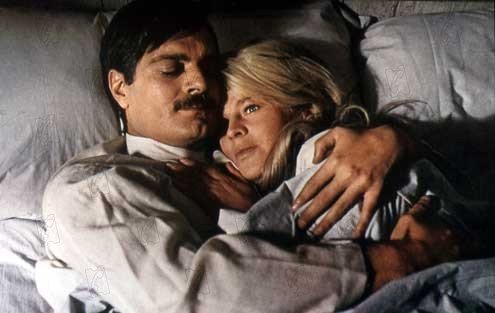
Doctor Zhivago (1965) By Andrew Barrick


https://blogger.googleusercontent.com/img/b/R29vZ2xl/AVvXsEhN8u4-DOxXBNfvsUyJjL95zOAZPcJyR3_5yVy-sKy7QD366AtFyAjf9owVliA-As3z_aBGWs5tDteQlB0nNnkGnjqjSYjdccjcnlSH4Te82mYwL35FDoD4RlWE8U2fzeZQH9y4KmNrsPfW/s1600/DoctorZhivago2.jpg


Title/Year: Doctor Zhivago (1965)

Director/Birth Country/Year Born: David Lean/England/1908

Budget: $11 Million

Gross: $111,721,910

Synopsis: A Russian doctor falls in love with a political activist, all be it with they are both married, during the Bolshevik revolution of the early 20th Century. The doctors half brother searches to locate what might be his long lost niece.

Narrative and Visual Keywords:WWI, WWII, Epics, Russian, Hero, Love, Politics.

Character Arc: A film of love, passion and discovery during the time of war in the first half of the 20th Century. The film follows Yuri Zhivago from his orphaned youth to his love lorn death. Zhivago must do what his heart tells him to choose what he considers the right morale part for himself and his country.

Camera/lighting/editing technique: Long takes, widescreen format, dialogue driven scenes.

Political/ Social Commentary: An adulterous love triangle set to the background of the Bolshevik Revolution. Morality of the upper and lower social classes.

Historical Relevance/ Recognition: Won 5 Academy Awards. (Art Direction, Cinematography Adapted Screenplay, Costume Design, Original Score). Costume design heavily influenced nineteen-sixties apparel design and fashion.

Notable Collaboration: Director David Lean worked with actor Alec Guinness six times during their careers. These films included: Great Expectations, Oliver Twist, The Bridge on the River Kwai, Lawrence of Arabia, Doctor Zhivago, A Passage to India)

Random fact, Etc.: Doctor Zhivago adjusted for inflation is the 8th highest grossing film in the United States.

Sources Cites:
http://www.boxofficemojo.com/movies/?id=doctorzhivago.htm
http://en.wikipedia.org/wiki/Doctor_Zhivago_%28film%29

Responce Questions:

1) Doctor Zhivago is full of elements of social class differences. In the film the Labour Party can be seen in a "peaceful" march, until they are brutally attacked by the Imperial Army guards, riding upon horseback, with swords drawn. Before this attack upon the innocent citizens, they marchers are seen singing in unison out in the cold, meanwhile the upper-class people are parting inside a warm, expensive restaurant. This clearly shows a division between the social classes.

2) One character in particular Pasha Antipov a representative of the Labour Party, whom later becomes Strelnikov a Red Army Commander, is seen as having characteristic of, literally, the wounded solider, and that of a strong individual with a high moral code. He is one one that whole heartedly believes that the power should belong to the people.

3) There were a number of melodramatic elements to Doctor Zhivago. Being a David Lean film what can expect just that. High character development, majestic epic scenes, and high tension elements. In the case of Doctor Zhivago, it is sometimes what isn't said verbally by a character but what is said through a characters facial expressions and mannerisms. A number of times the viewing audience only sees the expression on Yuri Zhivago's face, the emotion is clearly displayed through Omar Sharif's acting abilities.

4) The enemies portrayed in the film were seen more from a neutral eye. Whether it was the Labour Party or the Imperial Russian Army, they were seen from an objective viewpoint. Both parties involved were inclined to violent tendencies in general. Another "enemy" characterized in the film was that of "Morality". Here are main characters (Yuri, Lara, Victor) must choose what they feel is morally appropriate considering their situation.


Gallipoli(1981)- By Carol Ostling

Title/Year : Gallipoli, 1981
Director/Birth Country/Year Born:
 Peter Weir, Australia, 1944
Budget: 2.6million
 
Gross:
 $11,740,000(Australia); $5,732,587(USA);$2,854,00(1981 rental in USA and UK)
Synopsis:
 Two Australian sprinters become soldiers in World War I and are shipped to the Galliopli Campaign. 
Camera/Lighting/ and Editing Technique: Most memorable was the shaky camera whenever there was gunfight or a near by explosion. This was also used to help divert your eyes from some of the mistakes that they made with the guns, such as using rusty guns. There was also a lot of pans and following the movement of the character instead of cutting to. It felt like the takes were a lot longer then a modern day US film. Mostly outdoor/practical lighting. Editing felt like a " hide the edit" version, and would often edit for reaction shots and change of scene. Simple yet effective is what I mostly saw.
Political/ Social Commentary: Mateship(friendship); The attitudes towards war specifically the English and the Australians; Pro-War and Anti-War
Narrative and Visual Keywords:
 Desert, Running, Australian, mateship, Gallipoli Campaign, Athletes, Death, WWI, Breakdown of command, needless death, coming of age
Main Character/Arc:
 Archy Hamilton(Mark Lee), Frank Dunne(Mel Gibson) two mates who join the army together and get shipped to the Gallipoli Campaign.
 Notable Collaboration: David Williamson one of Australia’s most well known playwright's. He wrote the screen play for Gallipoli. Brian May, composer and award winner at the Australian Film Institute for best original score for Mad Max. Produced by R&R films, Rupert Murdoch’s father was a journalist during WWI. The other R of R&R is Robert Stigwood best known for the management of Bee Gees and the theatrical productions of Hair, Jesus Christ Superstar and Evita(1980 Tony Award for best Musical). Also known  for Grease and Saturday Night Fever.
Historical relevance/recognition:  It took three years to obtain the funds for the film because the government film agency said it was “not commercial”. While the movie did well in Australia when it was brought to the USA the opening weekend only grossed $59,757. After the opening weekend in the USA it quickly gained support and went on to be nominated for a Golden Globe for best Foreign film. Gallipoli helped propel the international career of Mel Gibson. Because of the movies popularity Gallipoli is shown each night in Dardanelles(the battlefield of the campaign and now tourist attraction) in many hotels and hostels. This movie also has historical relevance because it depicts the Gallipoli Campaign and the break down of command that helped become on of the most successful wins for the Turkish Military. Gallipoli Campaign is said to be “ considered to mark the birth of  national consciousness in both of these countries” .
Etc. Archy Hamilton’s character was inspired by a line in the book Official History of Australia in the War of 1914-1918:
                “Wilfred… was last seen running forward like a schoolboy in a foot-race, with all the speed he could compass” .
 

Reaction answers:


1) The evidence of the ineffective leadership was a primary concept in the second half of the movie. There was lack of communication between the battle front and the Brigade Commander causing lots of death and the failure of a mission. The social class differential was most pronounced in a scene were Archie and Dunne where going to a ball. However, this was an officer’s ball. In order for Dunne to party with his friend he had lie to a man. All the while their commanding officer saw what was going on and requested that Archie make his friend leave.  Not until the commander office got notice to go to the front was Dunne allowed to stay.  
     2)The solider of duty and honor was most seen throughout the movie. Archie was portrayed as the boy who is man who believes that it is everyman’s duty to fight for their country in a time of war. Most of the movie Archie seems to almost be trying to convince Dunne to fight for duty and honor, even when Dunne has signed up. It wasn’t until some of his mates died before he found his duty to fight. He needed to fight to save his friends, and his fight was in running.  
3)Some of the melodramatic poses were when people died. There was also at the very end when Archie died, that seemed like the most melodramatic moment in the movie.
    4)The enemy was shown as more neutral then brutal. The Australians even were playing shooting games with some of the Turks on the front lines. Everyone was laughing and having fun. When the Turks were sending cannon fire, amazingly we saw no one die from cannon fire. 

Lawrence of Arabia (1962) By Aaron Charny


Title/Year: Lawrence of Arabia, 1962
Director/Birth Country/Year Born: David Lean, England, B. 1908
Budget: $15,000,000 (estimated)
Gross: $70,000,000 (Worldwide) (January 2002)
Synopsis: During WWI British officer Lawrence is sent to Arabia to find Prince Feisal. While in Arabia, Lawrence helps unite hostile Arab tribes to strike back against the Turks.
Narrative and Visual Keywords: WWI, Classic, Epic, Biographies, British, Arabs, War, Hero, Revolts, Fights for freedom. 
Characterization/ Dialogue: T.E. Lawrence (Peter O'Toole), an officer in the British army serving in the Middle East during World War I. He is ordered to enter the desert and make contact with Prince Feisel (Alec Guiness), who is a British ally in the fight against Turkey. What follows is not only an account of how Lawrence became a pivotal figure in the Arab revolt, but his rise and fall of his character during the war. 
Camera/Lighting/Editing technique: Long takes, shots vary from extreme long shots to extreme close ups to stress a point. Tight pacing, there's plenty of action and adventure spread with character development, plot exposure, and visuals. 
Political/ Social Commentary: The British purpose in Arabia was to kick to the Turks out and occupy Arabia on its own. Lawrence purpose was to kick the Turks out, so that the Arabs can be free in their own land. 
Historical Relevance/ Recognition: Lawrence of Arabia was nominated for ten Academy Awards and won seven including Best Picture, Best Director, Best Art Direction and Best Original Score. Upon its release, the film was a huge critical and financial success and it continues to remain popular among viewers and critics alike. The visuals, the dramatic music and the screenplay have all been common points of acclaim and the film as a whole is widely considered one of the greatest films ever made. Its visual style has influenced many directors including George Lucas, Martin Scorsese and Steven Spielberg, who called the film a "miracle".
Notable Collaboration: Alec Guinness, who plays Prince Feisal in Lawrence of Arabia, has appeared in six David Lean movies including Great Expectations (1946), Oliver Twist (1948), The Bridge on the River Kwai (1957) and David Leans last film A Passage to India (1984). Lean once stated that Guinness is his favorite actor.
Random Fact, Etc,: Although 227 minutes long, this film has no women in speaking roles. It is reportedly the longest film not to have any dialog spoken by a woman. 

                http://www.top10films.co.uk/archives/3244
                http://en.wikipedia.org/wiki/Lawrence_of_Arabia_(film)


Reaction answers:

1. I didn’t see any evidence of ineffective military leadership. Lawrence character develops from being controversial soldier with an awkward sense of humor to a hero and is considered as a prophet to some of the Arabian people. As Lawrence witnesses the War and realizes that killing is not the correct solution. He states that he will no longer return to the desert and is being sent home realizing that he has not made any difference to the Arabs. 


2. The film portrays soldiers as strong individuals following code of honor and duty. The battle scenes show both sides dieing and getting wounded, but we never stay on this shot for very long. Except towards the end of the film when Lawrence visits the hospital and finds hundreds of wounded Turks. They are portrayed as suffering victims of war. Lawrence realizes that his efforts in this war have wounded hundreds of people. 

3. No melodrama, but we do get the familiar pleasures of cinema with our hero character fighting for the right cause. The epic scenes and the striking visuals of the hot dessert and dramatic music enhance the enjoyment of this classic firm.


4. The enemy is portrayed as neutral. We don’t see much of the enemy until they catch Lawrence. We see the enemy torturing Lawrence, but we expect that because in the earlier part of the film some characters prepare us for it.


Thursday, July 19, 2012

A Very Long Engagement (2004) by Mark Zuiderveld


Title/Year: A Very Long Engagement, 2004
Director/Birth Country/Year born: Jean-Pierre Jeunet, France, born 1953
Budget: $56.6 mil
Gross: $90.1 mil (worldwide)
Synopsis: A young French woman searches for her fiancé who may or may not have been killed in the Battle of the Somme during World War One.
Political/Social Commentary: Exposing war as a negative event; exploitative of soldiers, conveying soldiers as victims instead of heroes. Favors romantic perspective of a woman in love during a horrendous and bloody war (the juxtaposition of these two different elements).
Narrative/Visual keywords: Melodrama, flashbacks, letter writing (correspondence), coincidences, trench warfare, ensemble cast, multiple character POVs, vigilante justice, dramatic irony, romanticism, eroticism, nostalgia, deception, gangrene.
Main character/Arc: Mathilde, a stalwart detective-type of person (diagnosed with polio) in search of her fiancé, Manech. She is romantic yet robust in her personality. She lives with her aunt and uncle in the countryside.
Notable collaboration: Actors from Jeunet's previous films: Audrey Tautou (Amelie, 2001), Dominique Pinon (City of Lost Children, 1995), music composer Angelo Badalamenti (City of Lost Children)
Historical relevance/recognition: Nominated for Best Art Direction and Best Cinematography Oscars for year 2004 (77th Academy Awards). Received positive reviews from critics worldwide. Roger Ebert, film critic of the Chicago Sun-Times, wrote in his 2004 review, "…we have an idea of the trench warfare that makes WWI seem like the worst kind of hell politicians and generals ever devised for their men. To be assigned to the front was essentially a sentence of death, but not quick death, more often death after a long season of cold, hunger, illness, shell-shock and the sheer horror of what you had to look at and think about. Jeunet depicts this reality as well as I have ever seen it shown on the screen, beginning with his opening shot of a severed arm hanging, Christ-like, from a shattered cross." 
Etc. It's interesting to note Jean-Pierre Jeunet's visual style; his colors are traditionally faded brown and green, giving an eerie decayed interpretation of the world.


Sources: http://en.wikipedia.org/wiki/A_Very_Long_Engagement#cite_note-3
               http://www.boxofficemojo.com/movies/?id=verylongengagement.htm
      http://rogerebert.suntimes.com/apps/pbcs.dll/article?AID=/20041216/REVIEWS/41201006/1023


Mark's answers to A Very Long Engagement:


1.  The higher ranking French General (rank?) is portrayed negatively b/c he himself is overlooking his duties. He receives a correspondence (the pardon of the 5 prisoners) and purposefully ruins the letter by putting in the bathtub that he’s in, thereby muddying the ink on the letter and destroying the duty he is to carry out. He also overlooks the letter of pardon by ripping it to shreds while he is ogling pictures of naked women at his map table. Social class is evident here b/c it shows the upper class as the villain.


2.     Manech and the four other prisoners are primarily portrayed as victims. On the battlefield they are conveyed as being surrounded by death and destruction. One man escapes through a trap door in the ground; he later takes food from the dead man’s coat and feeds himself. In another scene a dead body is used as a shield against being hit by bullets. In the beginning a soldier pisses into another soldier’s helmet and covers up the evidence; this shows the deceptive attitude of soldiers and portrays military duty as a form of perversion instead of noble authority. Jeunet (and most French people I would argue) take stock in portraying the controversial aspects of human nature and showing flaws in behavior.


3.     Yes, the film’s cinematography paints a romantic picture of the time period and blends well the flashbacks of the battlefield with the present action of Mathilde travelling to the city in France for seeking information. The visual strategy is romanticized. The music enhances the melodrama, as well as the sweeping shots of the train going by (the camera angle and movement seems computer generated, but Dutched to give a sense of fast movement for the metaphor of gaining more knowledge about Manech and his whereabouts). The flashback scenes of Manech on the battlefield is a good spectacle b/c it shows him in the middle of cross fire; the grenade being tossed and landing in the Jerry plane.


4.     The enemy (the higher ranking official) is portrayed a bit exaggeratingly. The Marion Cotillard character is originally portrayed in an evil way, but her actions are justified, seeking vengeance. The German enemies are portrayed as neutral. The enemies that are conveyed are deceptive and on the same side of the French, giving the idea that soldiers and heroes on the same side are backstabbing each other and the cause (in a civil war type sense).

Sunday, July 15, 2012

Week 2 Reaction Questions - WWI


Choose One of the following films to analyze and create a post on the blog about. The post should include a completed template --see link to the right, as well as thought out answers to the questions below IN ADDITION to the template. Please cite any sources that you use & remember to include an image.


Theme One – The Hero
Lawrence of Arabia – David Lean
Sergeant York – Howard Hawks
Gallipoli -  Peter Weir
The Blue Max – John Guillermin

Theme Two - Melodrama
Oh what a Lovely War – Richard Attenborough
Doctor Zhivago – David Lean
The African Queen – John Huston
A Very Long Engagement – Jean-Pierre Jeunet


1. Did you find any evidence of ineffective military leadership (associated with upper-class ineptitude) that is compensated for through hard work and commitment of the lowly infantryman? Any scene where difference in social class is evident? Describe the dynamic or scene in which this theme is portrayed.

2. Does the film show a suffering soldier as a victim of war rather than exposing the structure of violence and presenting soldiers as elements in it? Or does it portray the soldier as a strong individual following codes of honor and duty How does the film achieve this point of view?

3. Does the film offer the audience the familiar pleasures of cinema – the romantic scenarios and melodramatic poses woven into a more direct and immediate sense of war? What elements of spectacle in the story (battle scenes or otherwise) achieve a sense of melodrama? 


4. Is the enemy portrayed as neutral or through hysterical exaggerations of atrocity? 


Answer each of the questions above in addition to completing the template. Depending on the theme you choose (The Hero/Melodrama) certain question will have more lengthy responses than others.

Good Luck!


Sunset Blvd. - by Julie V - Example of basic template


Title/Year : Sunset Blvd, 1950
Director/Birth Country/Year Born: Billy Wilder, Austria, b.1906
Budget: $1,752,000 (estimated)
Gross: $5,000,000 (Worldwide) ( January 1960)
Synopsis: A former silent-film starlet entangles with a young screenwriter, a tale of exploitation unfolds, humiliation and failed dreams.
Political/ Social Commentary: Self- reflexive in its relationship to Hollywood. Critique of censorship.
Narrative and Visual Keywords: survival, narcissism, melodrama, noir (solely stylistically), borders on black comedy, grandiose, decaying, cynical, love triangle, crime of passion, illusion, jealousy, prologue informs the ending with posthumous voiceover.
Main Character/Arc: Norma Desmond, simultaneously a sympathetic and villainous figure. Completely histrionic. Loses touch with reality.
Notable Collaboration: Cecil B. DeMille plays Cecil B. DeMille. As a director he himself was in the spotlight continuously from the early silent period to the age of CinemaScope and stereophonic sound. On set DeMille sported high boots, riding breeches, even twin pearl-handled revolvers.
Historical relevance/recognition: In 1989, the film was among the first group of 25 deemed "culturally, historically, or aesthetically significant" by the Library of Congress and selected for preservation in the National Film Registry.
Etc.Louis B. Mayer allegedly said of Director Wilder, "You have disgraced the industry that made and fed you! You should be tarred and feathered and run out of Hollywood!" Also, "I'm ready for my close-up Mr.DeMille" is a commonly re-appropriated quote from the film.


In addition to filling out the template you will always be asked a number of specific questions pertaining to the weeks lecture/discussion.